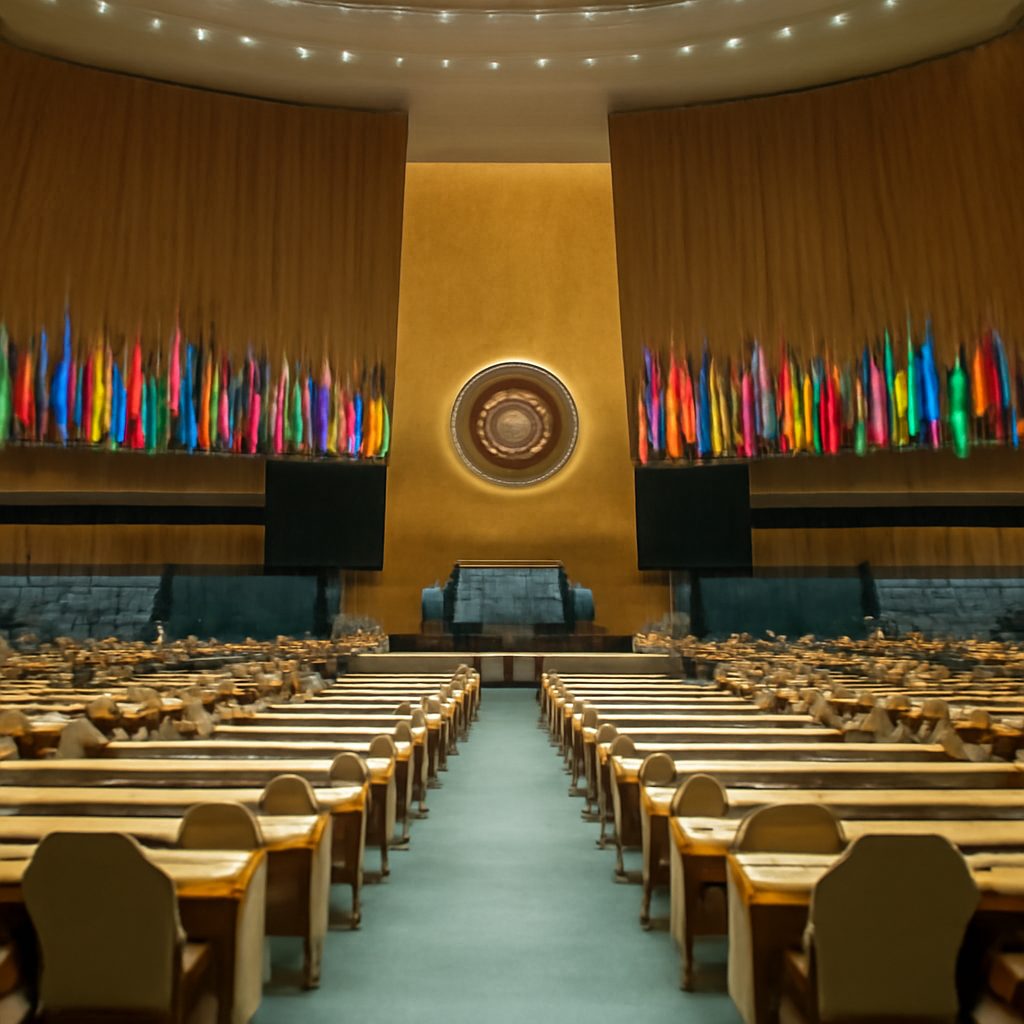
At the United Nations General Assembly, Iran's President delivered a formidable speech, stating that Iran "will never bow our head" to former U.S. President Donald Trump. This declaration underscores the enduring tensions between the two nations, especially in light of sanctions and diplomatic challenges. The speech reflects Iran's firm stance on sovereignty and its resistance to outside pressures.
Meanwhile, Ukrainian President Volodymyr Zelensky took the opportunity to draw attention to the ongoing concerns regarding Russian President Vladimir Putin. Zelensky’s statements are aligned with Ukraine's ongoing international strategy to bolster support against perceived Russian aggression and to secure backing from global allies.
Additionally, Venezuela's acting President Delcy Rodriguez is scheduled to address the assembly later. Her speech is anticipated to cover Venezuela's current political state and its international relations. Venezuela remains a point of interest for many member states due to its internal and external ideological clashes.
The UN General Assembly provides a platform for world leaders to present their national perspectives and engage in diplomatic discussions on pressing global issues. The Iranian president’s remarks highlight the persistent friction with the U.S., echoing historical diplomatic disputes and the broader geopolitical landscape.
These developments at the UN are closely monitored as they can influence international relations and economic conditions globally. The statements and policies presented by each country's leaders contribute to shaping the global dialogue, affecting strategic alliances and international policies.
The world waits to see how these discussions will translate into actions and whether they will bring any shifts in existing diplomatic ties. With pressing issues on the table, the outcomes of these speeches may play a significant role in the path countries take moving forward.