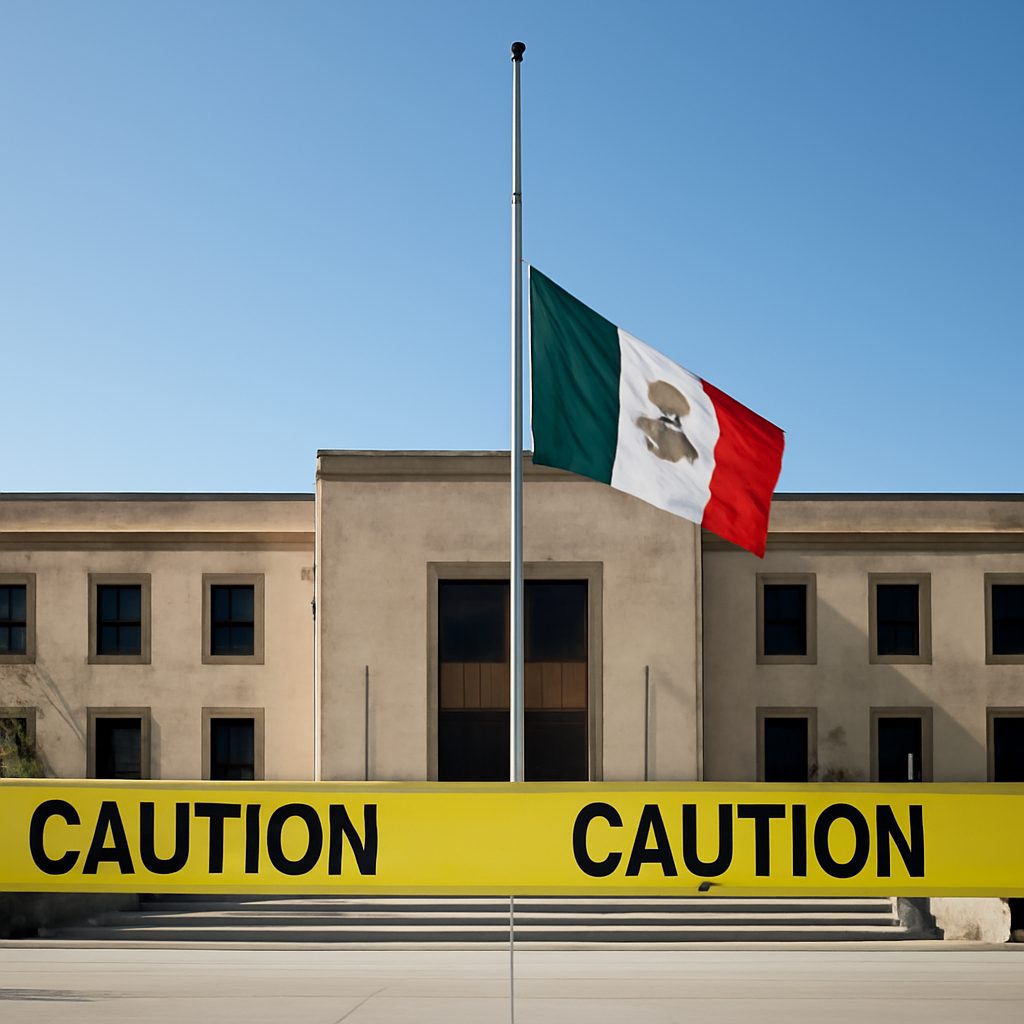
The assassination of Mexico mayor Valentin Lavin in a town hall has reignited concerns over political violence in the region. Lavin, who was associated with President Claudia Sheinbaum's leftist party, tragically lost his life just months after surviving a previous armed attack in January, according to local media.
This incident underscores the dangers faced by public officials in Mexico, where political assassinations have been a persistent issue. Mayor Lavin's alignment with Sheinbaum's party places his death within a broader context of violence targeting government figures associated with the ruling faction.
Political violence in Mexico has surged dramatically in recent years, often involving high-profile figures. This trend frequently leads to increased scrutiny of local governance and security measures. Lavin's assassination, occurring shortly after an earlier attempt on his life, highlights the vulnerability of local leaders and the ongoing struggles for safety and security in political circles.
Efforts to combat political violence have been ongoing, with various law enforcement reforms aimed at protecting officials. However, these tragedies reveal the enduring challenges in implementing effective security measures and curbing violence against leaders.
As Mexico grapples with this issue, the need for enhanced protection and systematic changes in addressing political violence becomes even more pressing. The impact of Mayor Lavin's death is likely to resonate across political discussions and could lead to accelerated efforts for reform.
This sobering event signals the importance of addressing political violence not only to safeguard public officials but also to stabilize Mexico's political climate for the future.