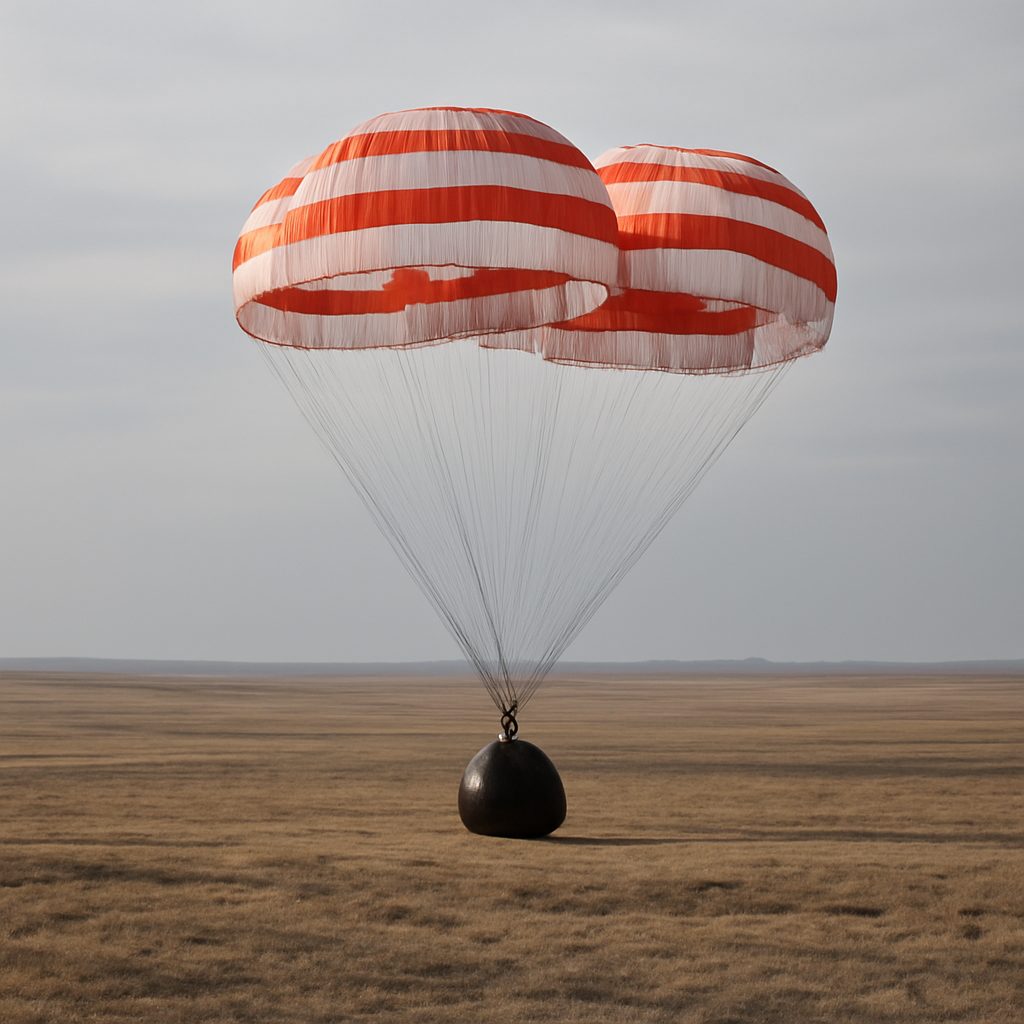
NASA and space enthusiasts celebrated the safe return of a Soyuz spacecraft carrying a NASA astronaut and two Russian cosmonauts, ending an extensive mission aboard the International Space Station (ISS). The crew concluded their 241-day stay with a landing in Kazakhstan, showcasing international collaboration in space exploration.
The Soyuz MS-28 spacecraft successfully touched down in the vast Kazakh steppe, a common landing site for returning space missions. The spacecraft's descent represents a critical phase of space travel, demonstrating the advanced engineering and coordination required for safe re-entry and landing.
The mission contributed significantly to the ongoing research aboard the ISS, an orbiting laboratory that plays a crucial role in scientific discoveries. Experiments conducted during their stay covered various disciplines, including biology, physics, and technology, helping scientists better understand the impacts of long-term spaceflight.
Working on the ISS provides unique opportunities for astronauts to observe and gather data that cannot be replicated on Earth. Their findings can inform future missions, assist in the development of new technologies, and offer insights into human health and adaptation to space environments.
This mission highlights the ongoing partnership between NASA and Roscosmos, Russia's space agency. Such collaborations have been instrumental in the success of the ISS, with diverse international crews living and working together in space, advancing scientific and diplomatic goals alike.
As the space community reflects on this successful mission, preparations are already underway for future expeditions. These efforts continue to push the boundaries of human knowledge and capabilities, setting the stage for new achievements in space exploration.