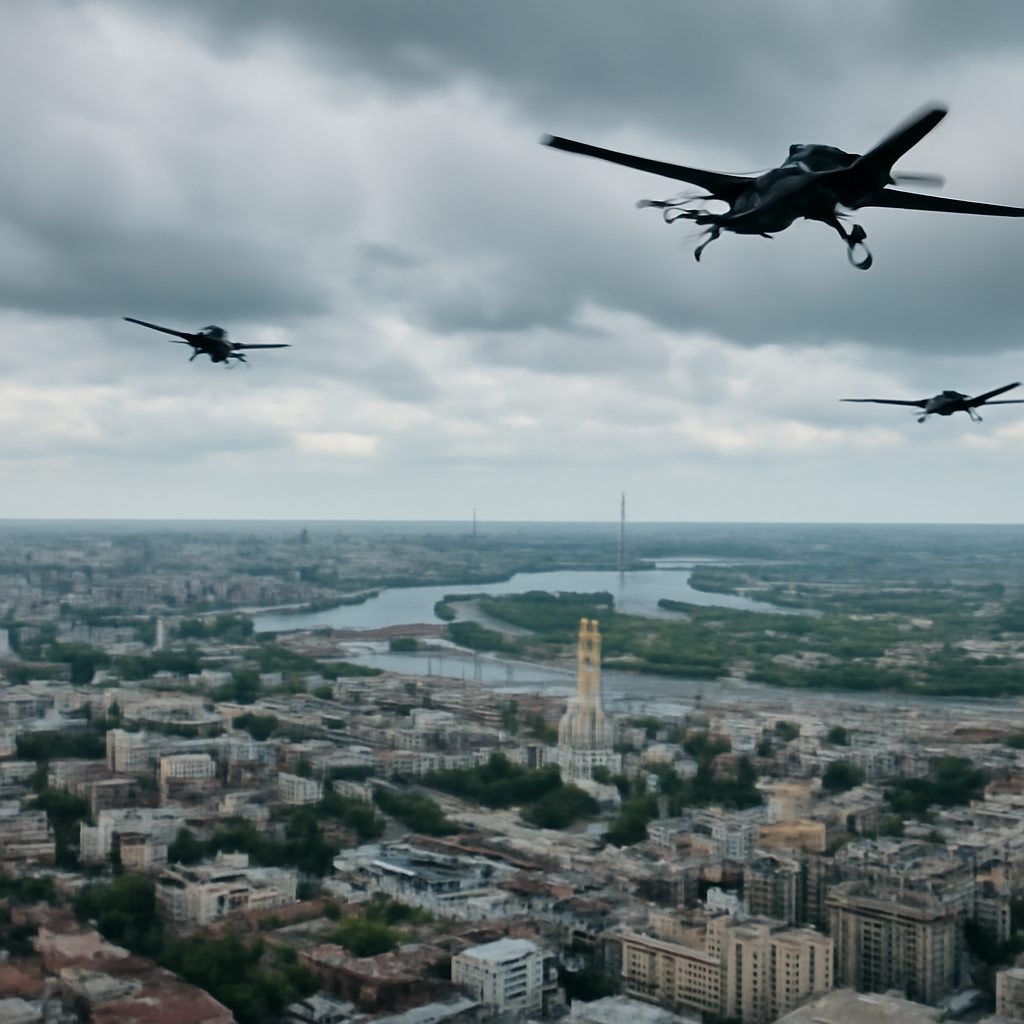
Russia's recent surge in drone attacks has intensified the ongoing conflict in Ukraine, illustrating the increasing reliance on technology in warfare. Over a span of four days, Moscow launched nearly 1,500 drones, significantly straining Ukraine's defense systems. This escalation, as reported, marks a strategic move by Russia to deplete Ukrainian resources and resilience.
The drones, used in both daytime and nighttime operations, have caused significant disruptions in Kyiv. Ukrainian President Volodymyr Zelenskyy has highlighted the challenge these relentless attacks pose. The increasing number of drones targeting urban centers marks a shift in strategy, with Russia aiming to maximize pressure on Ukraine both psychologically and materially.
Drone technology has reshaped modern warfare by allowing persistent assaults with minimal risk to personnel. For Russia, drones represent a cost-effective tool in their military arsenal, enabling continuous harassment of Ukrainian defenses. This aligns with broader trends in military strategy, where technology plays a pivotal role in gaining advantage.
As Ukraine grapples with this technological threat, there are broader implications for global military dynamics. The heavy use of drones underscores a shift toward more automated and remote warfare approaches, posing new challenges in developing effective countermeasures. Engaging in this technological arms race demands significant investment in anti-drone technologies.
This ongoing conflict between Russia and Ukraine illustrates the evolving nature of modern warfare, with technology at the forefront of strategic planning. As these drone attacks continue, the global community watches closely, concerned about potential escalations and the long-term impacts on regional stability.