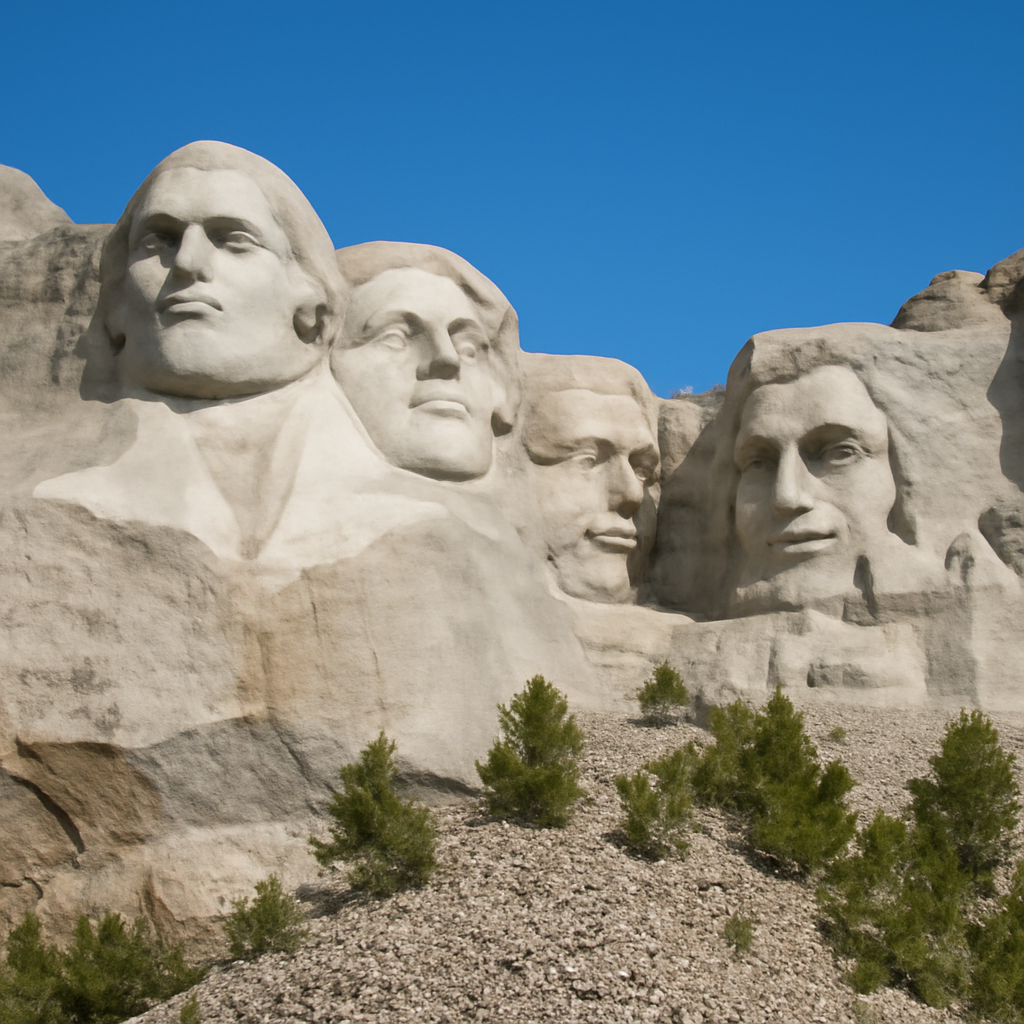
Former President Donald Trump recently returned to Mount Rushmore, renewing discussions about his historical impact and place among American presidents. This visit follows years of Trump suggesting that his likeness belongs on the iconic monument. The White House has stated there would be "no better addition," reflecting his enduring influence and the debate surrounding his legacy.
Mount Rushmore, located in South Dakota, is renowned for its massive stone carvings of Presidents George Washington, Thomas Jefferson, Theodore Roosevelt, and Abraham Lincoln. These figures were selected by sculptor Gutzon Borglum to represent the nation’s birth, growth, development, and preservation. Trump's interest in joining this illustrious group has been the subject of speculation and satire throughout his political career.
The primary keyword driving online interest in this event is "Trump Mount Rushmore visit." This highlights both Trump's continued relevance in political discussions and the historical significance of Mount Rushmore itself. Secondary keywords such as "Trump legacy," "presidential monuments," and "historic landmarks" further contextualize the ongoing dialogue about adding a modern figure to a site that commemorates foundational leaders.
This visit also comes on the heels of Trump sharing an image depicting his face superimposed onto Mount Rushmore, further fueling discussions about his place in history. While there are no confirmed plans for such an addition, the idea prompts debate over the criteria and significance of memorializing presidents in this manner.
In light of these events, Mount Rushmore remains a symbol of American identity and a canvas for our evolving interpretation of leadership and legacy. Whether or not new figures will be added is uncertain, but the monument continues to inspire fascination and discourse across the nation.