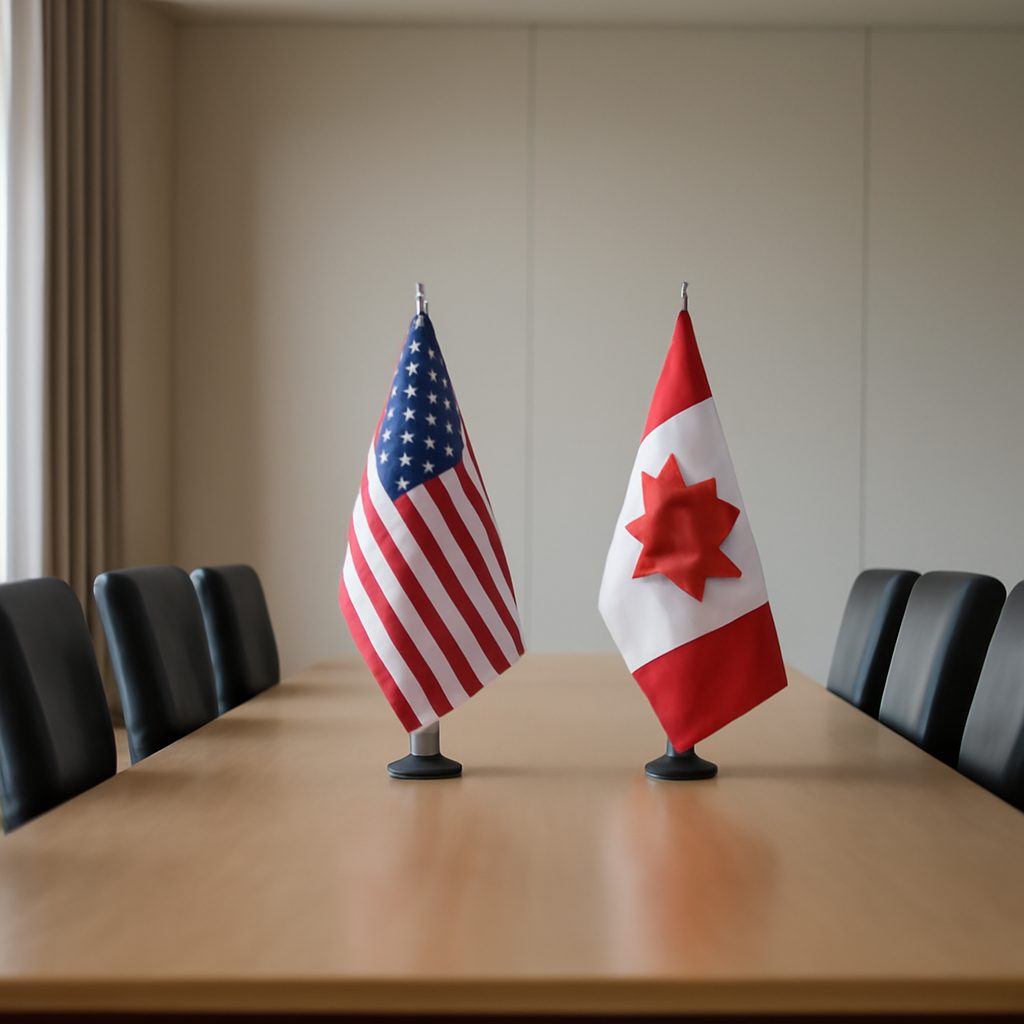
President Donald Trump addressed the suspension of trade negotiations with Canada following a halt announced by Canadian Prime Minister Mark Carney. The talks, disrupted due to disagreements over tariffs, have cast a spotlight on the complex dynamics of U.S.-Canada trade relations.
Trump's response came through a Truth Social post where he suggested that Canada seeks the benefits akin to statehood without bearing equivalent responsibilities. This comment marks the latest development in a series of trade tensions that have recently escalated between the neighboring nations.
Canada's decision to pause trade negotiations was attributed to unexpected tariff measures from the U.S. These tariffs, which some analysts have termed a strategic 'power play,' were viewed as last-minute alterations to the previously discussed terms. This move has raised significant concerns about the stability and future of North American trade agreements.
The history of U.S.-Canada trade relations is marked by both cooperation and contention. In recent years, issues such as tariffs on key goods have repeatedly surfaced, influencing the economic landscape on both sides. Experts suggest that the current suspension could have ramifications for industries and consumers reliant on cross-border trade.
With negotiations on hold, businesses and policymakers in both countries are closely monitoring the situation. The outcome of these discussions could potentially reshape aspects of the trade landscape, affecting everything from automotive parts to agricultural products.
Both nations have expressed a desire to resolve differences and return to the negotiating table, but significant challenges remain. The future of U.S.-Canada trade will likely depend on diplomatic finesse and the ability to find common ground amid differing national interests.