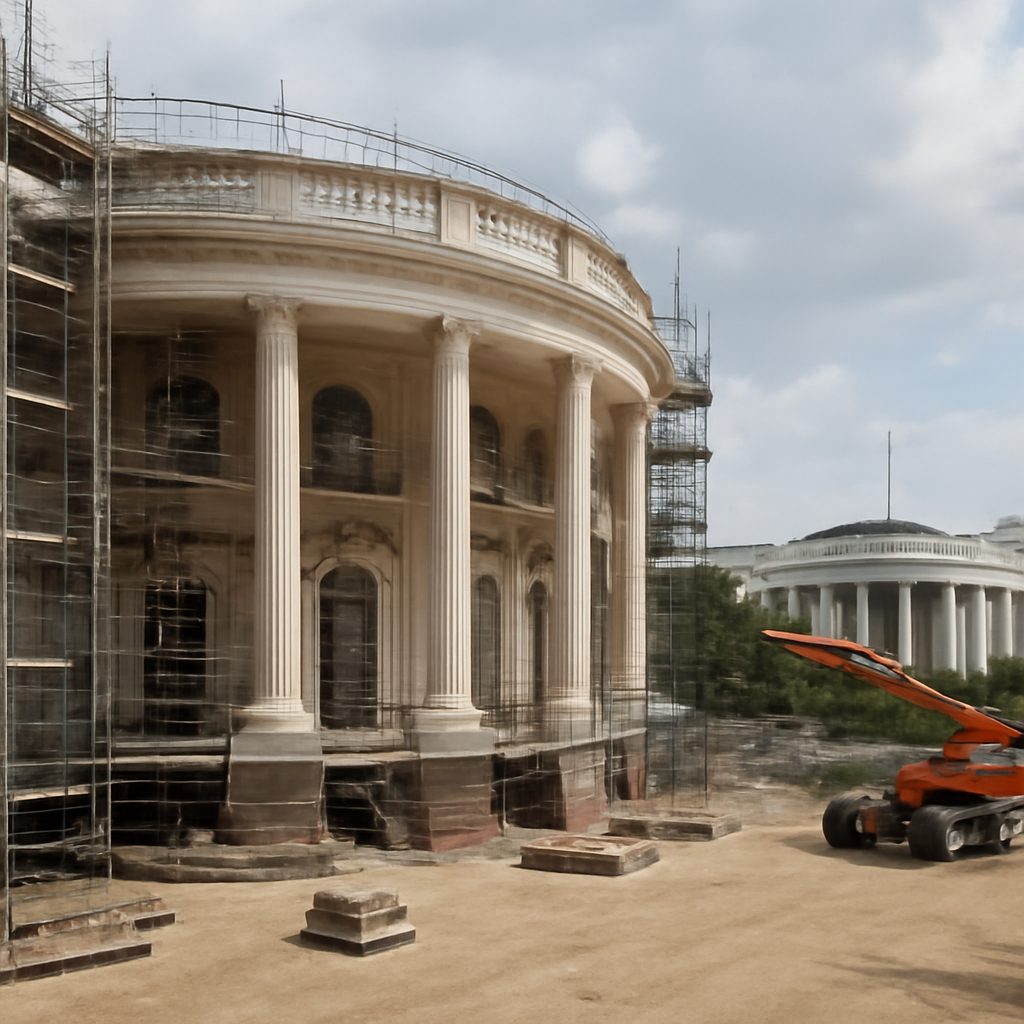
Former President Donald Trump has announced his intention to appeal a recent decision by a federal appeals court that blocks the construction of a new ballroom at the White House. The court ruling confirmed a previous decision by a federal judge to halt the development of the ballroom, although it permits below-ground construction to proceed.
The primary concern leading to the blocking of the ballroom's construction involves legal and regulatory challenges. These challenges often arise when there are disputes over approval processes for modifications to historic or significant properties such as the White House. In this case, opponents have highlighted potential impacts on the historic nature of the existing structures.
Trump's plan to take the case to the Supreme Court highlights a continued effort to push forward with the ballroom project. The proposed ballroom was initially part of a broader White House expansion plan, which includes various modernization efforts aimed at enhancing the facility's infrastructure and usability.
The complications surrounding the project emphasize the complexity involved in altering government buildings protected under numerous regulations. These rules typically require thorough reviews and often face public scrutiny. Adjustments to any national historic site must meet strict criteria to preserve their integrity and significance.
As the situation unfolds, the focus will remain on the future legal actions and how they may impact both planned and in-progress construction efforts. With both sides prepared to advance their arguments, the eventual outcome could set a precedent for future projects involving national landmarks.