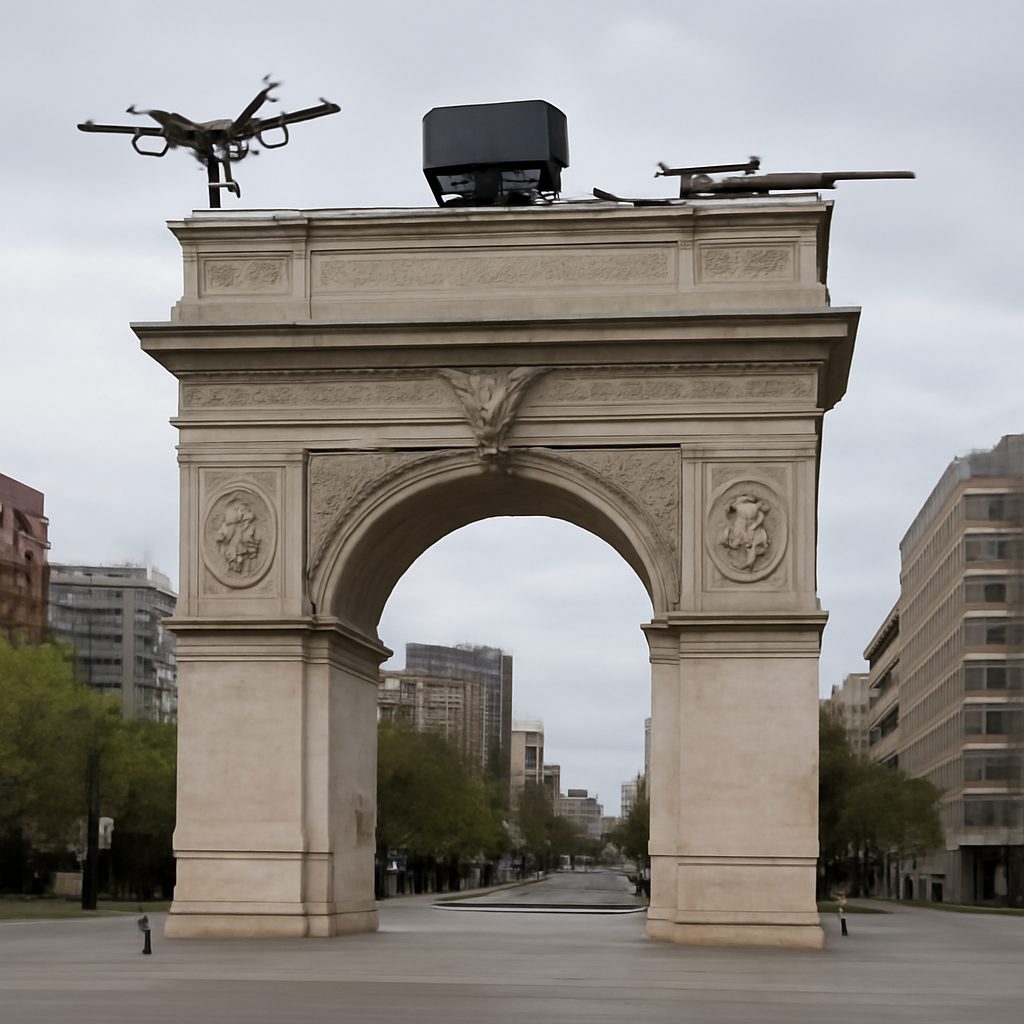
President Trump's recent announcement that his envisioned triumphal arch in Washington D.C. could function as a 'military complex' has sparked significant interest. The former president suggests that incorporating sniper and drone technologies at the site is essential for national security. This controversial proposal is currently under review by a federal court, which is assessing the arch's legality and broader implications.
The proposed arch would not only serve as an architectural landmark but would also incorporate advanced military technologies. The inclusion of drones and snipers represents a significant step toward integrating surveillance and defense measures in public spaces, a concept that has both supporters and critics debating its potential impact on privacy and security.
The legal scrutiny of this project highlights ongoing tensions between preserving civil liberties and addressing security concerns. Legal experts are closely evaluating whether the arch complies with federal regulations and international law, especially considering its potential use for surveillance and defense.
The broader context of this development aligns with discussions about the role of technology in modern security strategies. As cities worldwide increasingly adopt smart technology for security purposes, the potential military use of such an iconic structure could set a precedent for future urban developments.
While the court deliberates, the public remains divided. Some argue that the integration of military-grade technology is necessary for protecting national interests, while others voice concerns about privacy and the militarization of public spaces.
The decision on this proposal will likely influence future urban security strategies and architectural designs, reflecting the ongoing balance between innovation and rights protection in a rapidly evolving technological landscape.