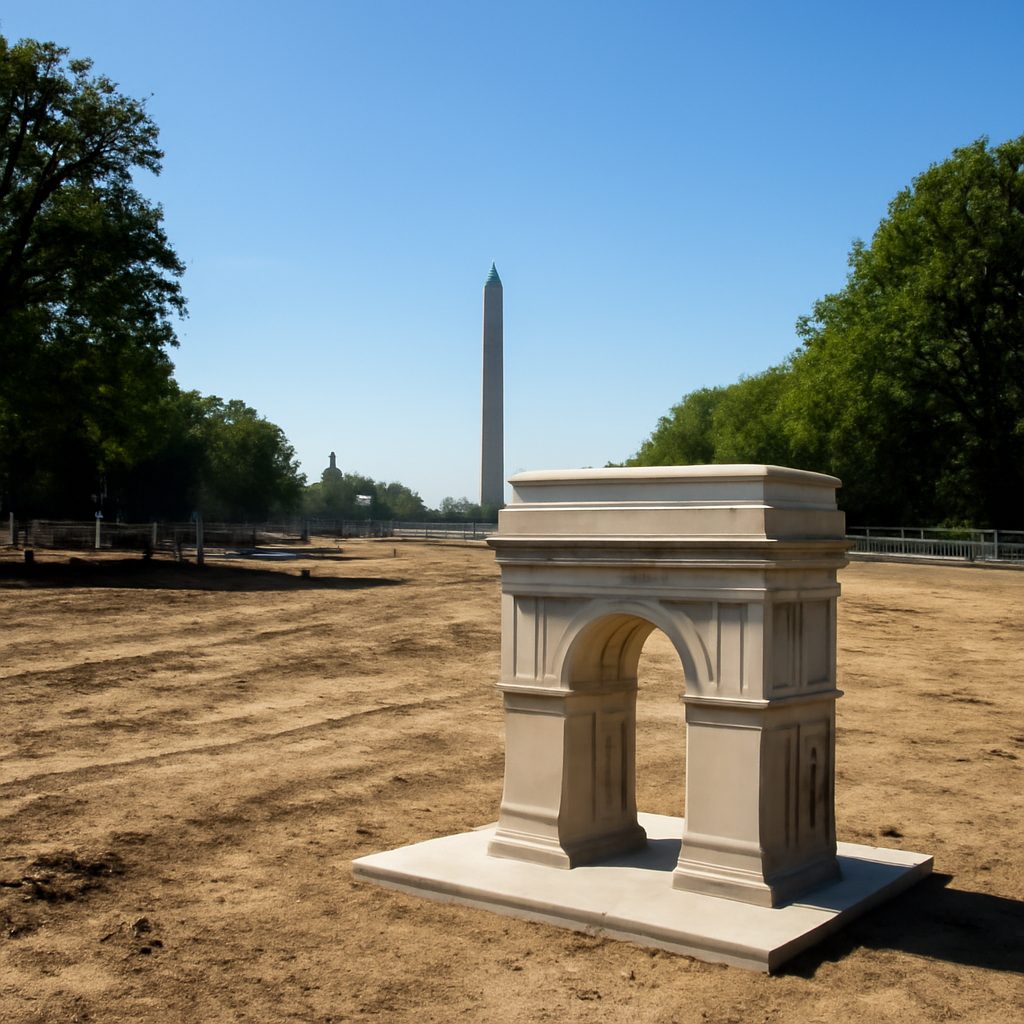
The proposed Washington arch by former President Trump is gaining attention as it is reframed as a national security initiative. Originally envisioned as a symbolic structure, the arch's purpose may evolve into a strategic facility for sniper and drone operations, underlining its potential defense applications.
The concept of utilizing architectural projects for national security is not new. Throughout history, structures have been repurposed to serve military and defense needs. In this case, transforming the Washington arch into a security facility reflects a shift in priorities, focusing on incorporating strategic defenses into urban landscapes.
Advocates for the arch's new function argue that its location in the nation's capital inherently makes it a valuable asset for security and surveillance operations. By integrating advanced technology such as drones, the proposed facility could contribute significantly to national defense mechanisms, providing a vantage point for monitoring and safeguarding key areas in Washington, D.C.
Critics, however, raise concerns about the implications for civil liberties and the impact of such a military focus in a public landmark. The debate highlights the broader tension between national security measures and public transparency. As plans for the arch progress, stakeholders will need to balance these considerations while addressing the project's logistics and costs.
Whether the Washington arch ultimately becomes a part of national defense strategy will depend on further evaluations and decisions by relevant authorities. While the idea of such a transformation is met with mixed reactions, it underscores an ongoing trend of blending architectural elements with strategic security functions in urban settings.